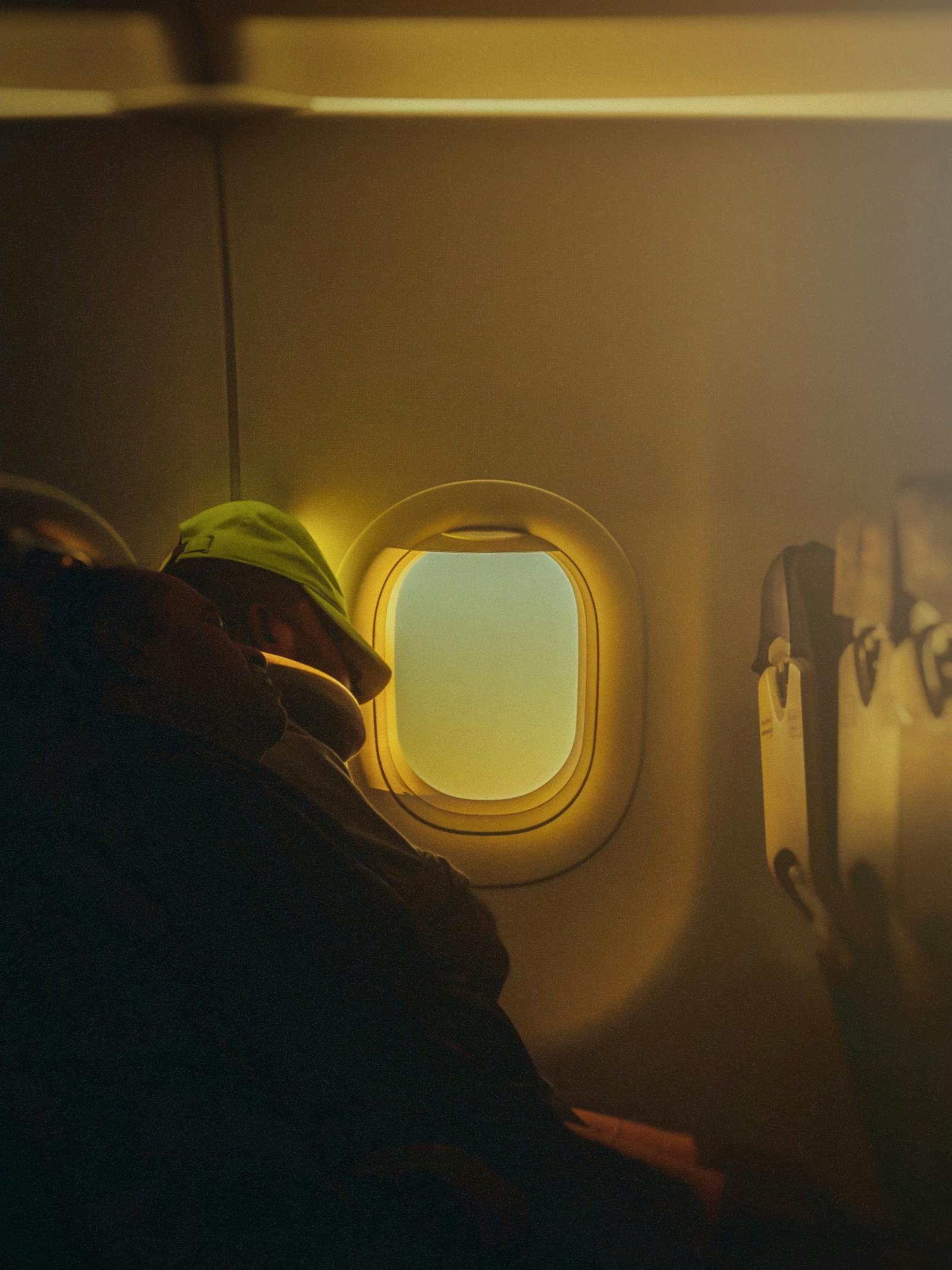
Red-eye flights: how to actually sleep
The Longhaulist team updated
Direct answer
To actually sleep on a red-eye, start the trip mildly sleep-deprived (no caffeine after lunch, no nap), board ready for sleep (no laptop, no late meal), pick a window seat in the rear half, and skip the meal service. Use an eye mask, earplugs, and a layer warmer than feels necessary at the gate. A 0.5 mg melatonin dose at takeoff is reasonable for most adults if your doctor agrees. Plan to land tired but functional — full recovery is on arrival, not in the air.
A red-eye is not a long-haul. The strategy is different: you’re maximising 4–6 hours of seated rest, not managing an 8-hour-plus circadian event.
Why it matters for long-haul economy
Most red-eyes are 4–7 hour flights — too short to fully sleep, long enough to wreck the next day if you don’t. The math is brutal: door-to-door, you lose 3–4 hours of usable night to boarding, taxi, meal service, descent, and immigration. That leaves 3–5 hours of possible seated sleep, and the cabin is fighting you for most of it.
The standard “long-haul” sleep playbook doesn’t quite apply. This guide is the red-eye-specific version.
What’s different about a red-eye
Compared to a 10+ hour overnight long-haul:
- Less total sleep available — usually 3–5 hours vs 6–8
- More boarding/landing time as a fraction — overhead, sleep window may be only 50% of the flight time
- Crew runs the cabin awake — full meal service is common even on 5-hour flights
- You arrive at destination breakfast time, not afternoon — recovery looks different
The strategy isn’t “sleep through the flight”. It’s “extract as many quiet sleep minutes as possible from a hostile environment, then recover deliberately on arrival”.
Before the flight
Build sleep pressure
The biggest difference between people who sleep on red-eyes and people who don’t is how tired they are at the gate. To stack the deck:
- No caffeine after lunch on the day of the flight
- No nap that day (even a 20-minute one will sabotage you)
- A normal-ish wake time — don’t sleep in
- Light exercise in the afternoon — a 30-minute walk is enough
If you board genuinely tired, half the battle is won. If you board wired from coffee and screen time, no amount of gear will save you.
Eat dinner early
Eat 4+ hours before takeoff. A red-eye boarding at 10pm with a 9pm dinner means you’re still digesting when you’re trying to sleep at cruise. That’s reflux territory, especially reclined.
Avoid spicy food, large portions, and alcohol. We cover the specifics in What to eat before a long-haul flight.
Pick the seat
Window seat, rear half. This is the most important call.
- Window so you can lean against the wall and aren’t woken by aisle climb-overs
- Rear half because the cabin is darker, quieter after takeoff, and the lavatory queue won’t reach you
- Avoid the last row (galley noise) and the row in front of the bulkhead (no recline)
- Avoid the bulkhead row if you want your bag at your feet — bulkhead seats require everything in the overhead bin
If a window isn’t available, an aisle in the rear half is the next-best. Middle seats on red-eyes are generally unsalvageable for sleep.
Pack three items
For a red-eye, these are not optional.
Eye mask — cabin lights go on and off, the seatmate’s screen lights your face, sunrise will hit through the windows.
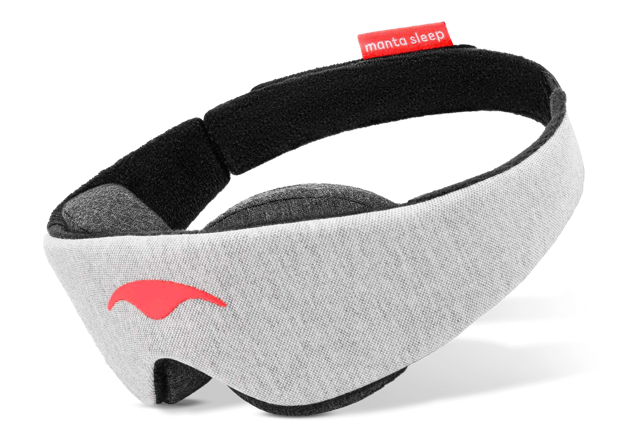
Manta
Manta Sleep Mask
Contoured cups sit away from eyes — no lid pressure, no interference with REM movement. Adjustable for most face shapes. Full blackout. Stays in place when you turn.
View on AmazonEarplugs — the cabin is loud, the seatmate snores, the engine drone is constant. Foam plugs work; reusable silicone is more comfortable for repeated use.
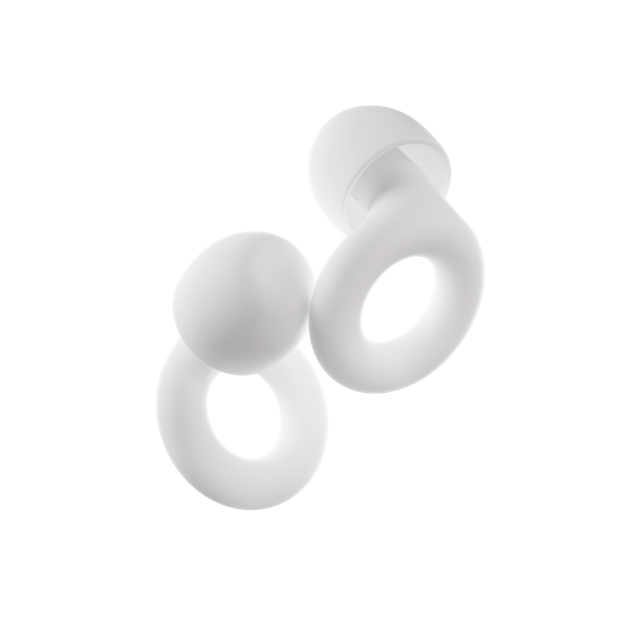
Loop
Loop Quiet 2 Earplugs
24 dB SNR in reusable silicone — more comfortable for long-duration wear than foam for many people. Four ear-tip sizes included. Good for those who find foam earplugs irritating.
View on AmazonA warm layer — cabins are kept at 15–20°C at cruise. You will be colder than feels reasonable. A packable hoodie or a thin down jacket is enough.
At the airport
Don’t load up at the bar
A glass of wine is fine if it’s your normal evening pattern. Three drinks at the airport will fragment your sleep on the flight (alcohol suppresses REM and causes mid-night wake-ups), then leave you dehydrated on landing.
Move before boarding
Walk for 15 minutes before you sit down. You’re about to sit for 4+ hours in a position you can’t fully adjust. Pre-loading some movement helps with circulation and reduces the urge to fidget once you’re trying to sleep.
Refill water
A 500ml–1L bottle filled after security. Cabin air is dry. You’ll drink less than you think — having water within reach matters more than the volume.
On the plane
Decline the meal
This is the single biggest strategic call on a red-eye. Most airlines serve a full meal even on 5-hour overnight flights. Eating it:
- Pushes your sleep window back by 60–90 minutes
- Means you’re digesting in a reclined seat
- Means cabin lights are on for the duration of service
Tell the cabin crew at boarding that you’ll be skipping the meal. They’ll let you sleep.
Sleep mode at takeoff
As soon as the seatbelt sign goes off:
- Set the seat to recline (modest — fully reclined is rarely worth the small angle gain)
- Compression socks visible if not already on
- Eye mask on
- Earplugs in
- Layer up
- Hood up if you have one — extra darkness, ear coverage, reduces side-to-side head movement
If you take melatonin and your doctor’s agreed, 0.5 mg is the dose backed by sleep research for circadian shifting. Higher doses don’t sleep you faster; they make you groggier the next morning.
Position yourself for actual sleep
The cabin geometry is fixed. Your body has three viable positions:
- Window-leaning side rest — head against the window or a folded jacket, knees toward the wall
- Forward lean — torso forward onto the seatback in front (only viable if it’s reclined into you slightly; useful on short red-eyes)
- Reclined upright — neutral spine, supported chin and head
We cover the geometry in detail in Best sleeping positions for long-haul economy flights.
If you wake up
You will wake up 2–4 times on a typical red-eye. Each time:
- Don’t check your phone — light is sleep-killing
- Don’t think about how much time is left
- Eye mask back on, breathe slowly, accept the next 30 minutes as rest even if it’s not sleep
Fragmented sleep on a red-eye still has value. People who try to “make up” for woken sleep with caffeine or a movie generally arrive worse than people who just rested through.
On arrival
The first 60 minutes
You’ll have slept 3–5 hours seated. You’ll land between 5am and 8am local. The temptation is to power through with caffeine and check into the hotel later. The better plan:
- Bright light immediately — go outside if you can, even briefly. Light is the strongest anti-jet-lag signal.
- Hydrate — 500ml of water on the way out of the airport
- Light food — a real breakfast within an hour
- Caffeine if you need it — but only until early afternoon
The “should I nap?” question
On a same-day-arrival red-eye where you have meetings or commitments:
- Skip the nap if possible
- If unavoidable, cap at 20 minutes before 3pm local
- Commit to local bedtime — even early — to recover the sleep deficit overnight
On a red-eye where you have the day free:
- A single 90-minute nap before 1pm is acceptable if you’ve genuinely undersliept
- Then push through to a local bedtime no later than 10pm
- You’ll feel normal by day 2
When the red-eye is also a time-zone shift
Many red-eyes are also transcontinental — NYC to LA, London to Athens. In that case, the jet lag calculator plan still applies on top of the sleep-recovery plan above. The differences:
- Eastward red-eye (e.g. LA → NYC): bigger problem, because you’re losing hours AND undersleeping. Aim for any sleep on the flight; commit to local bedtime on arrival even if it feels early.
- Westward red-eye (e.g. NYC → LA): rarer, because westward flights tend to be daytime. If you have one, stay up later than usual the next night.
What doesn’t work
- Sleeping pills (prescription) — work, but the morning groggy hangover usually outweighs the in-flight benefit on short flights. A separate conversation with your doctor if you fly red-eyes weekly for work.
- Multiple “premium economy” upgrades on short red-eyes — the marginal sleep gain from 2 inches of pitch is small. Spend the money on a hotel room with a real bed instead.
- “Just have a few drinks to fall asleep” — works for falling asleep, ruins sleep continuity. You’ll wake at 3am cabin-time, parched.
- Trying to sleep without an eye mask — cabin lighting on red-eyes is unpredictable. Don’t gamble.
FAQ
How do you sleep on a red-eye flight? Build sleep pressure (no caffeine after lunch, no nap), board ready for sleep (no late meal), pick a window seat in the rear half, decline the in-flight meal, and use an eye mask + earplugs. Skip alcohol on board.
Should you take a sleeping pill on a red-eye? Talk to your doctor. For most travellers, 0.5 mg melatonin is sufficient for falling asleep on a short flight without next-day grogginess. Prescription sleep aids can work but the morning hangover often costs more than it saves on flights under 6 hours.
Should you eat the meal on a red-eye? Usually no, if you want to sleep. Eat dinner 4+ hours before takeoff and decline the in-flight meal. Tell cabin crew at boarding.
What’s the best seat on a red-eye? Window seat in the rear half of economy. Avoid middles, last row (galley noise), and the row in front of the bulkhead (no recline).
Can you really fall asleep in coach on a red-eye? Yes, for most people who prepare. The two highest-impact preparations are building sleep pressure during the day and skipping the in-flight meal. Without those, sleep is unlikely regardless of seat or gear.
How tired will I be the next day? Expect to feel functional but not sharp. Avoid major decisions until you’ve slept a full night locally. Most people recover from a red-eye in one full local night’s sleep, two if combined with a significant time-zone shift.
Are red-eyes worth booking? For business: often yes — you save a day. For leisure: usually only if the price differential is meaningful. Build in a recovery day if possible.
Should I bring a neck pillow on a red-eye? Only if you know it works for your sleeping posture. Side-sleepers and window-leaners are usually better served by the window itself plus a folded jacket. We cover the geometry in Best sleeping positions for long-haul economy flights.
Sources
- Mackenzie & Watt, 2003, Aviation, Space, and Environmental Medicine: alcohol and in-flight sleep
- Burgess et al., 2010, Journal of Clinical Endocrinology & Metabolism: low-dose melatonin
- American Academy of Sleep Medicine: sleep continuity and napping guidelines
- Aerospace Medical Association, “Useful Tips for Airline Travel”