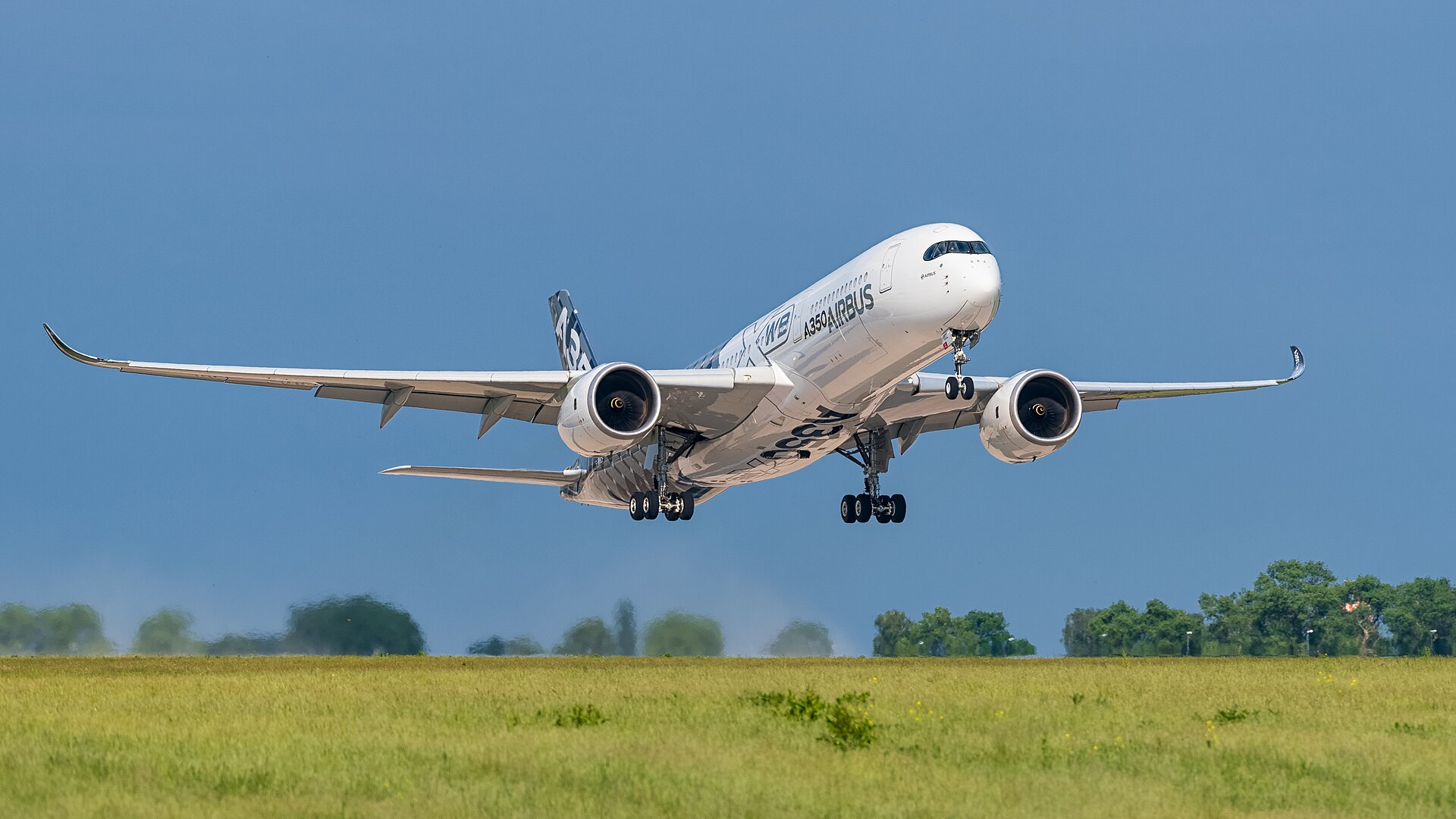
Airbus A350 economy: what actually matters
The Longhaulist team updated
Key takeaways
- The A350's main advantages are cabin altitude (~6,000 ft) and lower noise — not seat width or pitch.
- Cabin altitude matters more than most passengers realise: lower altitude means more oxygen, less fatigue.
- Seat quality depends entirely on the airline's configuration, not the aircraft itself.
- Forward window seats away from galleys give the best chance of uninterrupted sleep.
- The A350 is slightly quieter than the 787 and noticeably quieter than the 777.
Direct answer — is the A350 good for economy?
Yes. The Airbus A350 is one of the best aircraft for long-haul economy because it reduces the two main drivers of in-flight fatigue: noise and cabin environment. It runs quieter than older widebodies, maintains lower cabin altitude (around 6,000 ft), and supports higher humidity than legacy aircraft. These factors improve sleep probability and reduce dehydration. Seat comfort, however, depends entirely on the airline’s layout — the A350 does not guarantee wider seats or more legroom.
Why the A350 feels different in economy
The A350’s advantage comes from its composite fuselage and newer environmental systems. Unlike older aluminium aircraft, it can tolerate higher internal humidity and lower pressurisation stress.
Cabin altitude on the A350 sits around 6,000 feet, compared to approximately 8,000 feet on older aircraft like the 777. Lower cabin altitude means higher oxygen partial pressure, which correlates with reduced fatigue and fewer headaches on long-haul flights.
Humidity is also higher. Traditional cabins often drop below 15% relative humidity. The A350 can maintain higher levels without structural degradation, reducing dehydration symptoms — dry eyes, throat irritation, skin dryness — that compound over a 12–14 hour flight.
~6,000 ft
effective cabin altitude on the A350 — vs ~8,000 ft on older widebodies
Noise levels and what they change in practice
The A350 is consistently reported as quieter than the 777 and slightly quieter than the 787, particularly in the forward cabin.
Lower noise levels improve your ability to fall asleep and stay asleep. Continuous cabin noise acts as a stressor, increasing micro-awakenings even when you remain unconscious. Reducing baseline noise increases total uninterrupted sleep time. The difference between the A350 and a 777 is audible without earplugs — though earplugs remain worthwhile on any aircraft.
Seat width, pitch, and layout by airline
The A350 typically uses a 3-3-3 layout in economy (9-abreast). This results in seat widths around 17–18 inches depending on the airline.
There is no universal A350 seat standard. Airlines trade width for density. Some operators run 9-abreast, others squeeze in 10. Check the specific airline configuration before booking.
| Airline | Configuration | Seat width | Pitch |
|---|---|---|---|
| Qatar Airways | 3-3-3 | 17.2 in | 32 in |
| Cathay Pacific | 3-3-3 | 17.5 in | 32–33 in |
| Singapore Airlines | 3-3-3 | 18 in | 32 in |
| Lufthansa | 3-3-3 | 17.5 in | 31–32 in |
Configurations vary by sub-variant and refurbishment. Verify on the airline’s seat map before booking.
Best seats in A350 economy
Forward cabin window seats away from galleys and lavatories provide the best balance of noise reduction and sleep support. Specifically:
- Window seat, rows 20–30 on most operators — far from the forward galley, away from lavatory foot traffic
- Avoid the last 5 rows — galley directly behind, seats often do not fully recline
- Avoid exit rows — restricted recline on many A350 configurations
- Middle seats are wider than middle seats on 10-abreast aircraft, but remain the worst option for sleep
Use the seat picker for row-range and seat-letter guidance matched to your priority, and the airline’s own seat map to confirm the exact configuration.
A350 vs 787 vs 777 — economy comparison
| Factor | A350 | 787 Dreamliner | 777 |
|---|---|---|---|
| Cabin altitude | ~6,000 ft | ~6,000 ft | ~8,000 ft |
| Humidity | Higher | Higher | Low |
| Noise | Very low | Low | Higher |
| Typical layout | 3-3-3 | 3-3-3 | 3-4-3 (often 10-abreast) |
| Seat width (economy) | 17–18 in | 17–18 in | 17–18 in (can be 16.7 in 10-abreast) |
The A350 and 787 are comparable on cabin environment. The A350 edges the 787 on noise. Both are substantially better than the 777 on altitude and humidity. The 777’s disadvantage is partly offset by the fact that many operators fly it on routes where the cabin environment matters less (shorter legs).
Frequently asked questions
Is the A350 quieter than the 787 in economy? Slightly — particularly in the forward cabin and near the engines. The difference is noticeable without earplugs.
Are A350 seats wider than on other planes? Not inherently. Seat width depends on the airline’s configuration. A 3-3-3 layout on an A350 gives similar widths to a 3-3-3 787.
What are the best seats on an A350 economy cabin? Forward window seats, away from galleys and lavatories. Rows vary by airline.
Does the A350 help with jet lag? Indirectly. Better sleep during the flight and reduced dehydration mean you land in better condition — but they do not shift your circadian clock. Use the jet lag calculator for that.
For in-flight sleep tactics that work on any aircraft, see how to sleep on a long-haul flight. For DVT prevention, see compression socks on long-haul flights.