Melatonin for flights: dose, timing, what works
The Longhaulist team updated
Direct answer
For jet lag, the evidence-backed melatonin protocol is 0.5 mg taken at the destination’s evening bedtime, on eastward flights only, starting on arrival day. This is the dose used in circadian-shifting research (Burgess et al., 2010, and earlier work by Lewy and colleagues). Higher doses don’t shift the clock faster — they cause sedation without faster phase advance, and often produce next-day grogginess.
Melatonin is not a sleeping pill. It’s a circadian-phase signal. Treating it like a sleep aid (taking it whenever you can’t sleep, at random doses, in any direction) is most of why people think it doesn’t work.
This is general guidance, not medical advice. Talk to a doctor before adding any supplement, especially if you take medication or have a medical condition.
Why it matters for long-haul economy
Melatonin is one of three tools that meaningfully shorten jet lag (the others are timed light exposure and controlled sleep timing). It’s also the most misused. Most over-the-counter melatonin in the US is sold at 3 mg or 5 mg, doses that are 6–10x what’s needed for circadian shifting. Most people take it at the wrong time, in the wrong direction, and conclude it doesn’t work.
Used correctly, it compresses eastward jet lag recovery by 1–2 days on a 6+ zone shift. Used incorrectly, it does roughly nothing useful and a little bit of harm.
What melatonin actually does
Your pineal gland releases melatonin in the evening as light fades. It’s the chemical signal that says “biological night is approaching”. Your body uses it to align sleep timing, core temperature, and a chain of downstream rhythms.
Taking exogenous (supplement) melatonin at the right time shifts your dim-light melatonin onset (DLMO) in the direction you take it relative to your current rhythm:
- Taken in the evening → advances the clock (earlier sleep, earlier wake)
- Taken in the morning → delays the clock (later sleep, later wake)
That’s the entire mechanism. It’s a phase-shift signal, not a hypnotic.
It does have a mild sedative effect at higher doses. That sedation isn’t the useful part — it’s a side effect.
The dose that actually works
The peer-reviewed circadian literature settled on 0.3 to 0.5 mg as the effective dose for phase shifting in healthy adults. Burgess et al. compared 0.5 mg vs 3.0 mg and found:
- Both shifted the clock
- 0.5 mg produced a slightly larger and more consistent shift than 3.0 mg
- 3.0 mg caused more sedation and more next-day grogginess
This is counter-intuitive. More is not better. The physiological dose required for circadian effect is small. Higher doses saturate receptors and produce sedation without faster shifting.
Most US over-the-counter melatonin (3 mg, 5 mg, 10 mg) is dosed for the sedative effect, not the circadian effect.
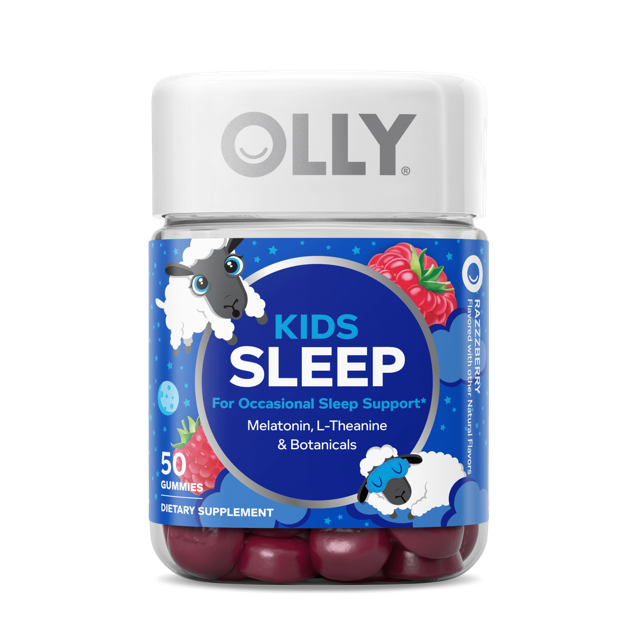
OLLY
OLLY Kids Sleep 0.5 mg Melatonin Gummies
0.5 mg matches the dose used in circadian-shift research — most over-the-counter melatonin is 5–10× too high. Marketed for kids, but the dose is the same one used in adult jet lag studies. Not a pure isolate (also contains L-theanine, chamomile, lemon balm), so source elsewhere if you want clean melatonin only.
View on AmazonIn Europe, prescription melatonin is typically dosed at 2 mg (extended release) — closer to physiological but still above the circadian-optimal dose for most adults.
When to take it
This is where most people go wrong.
Eastward travel: take in the destination’s evening
You’re trying to advance your clock (sleep earlier than your body wants to). Melatonin reinforces the “evening is coming” signal at destination time.
- Take it 30–60 minutes before your target local bedtime
- Continue for 3–5 nights until your clock has caught up
- Don’t take it during the flight unless your flight lands at destination night and you want to use the in-flight time as part of your shift window
Westward travel: usually don’t
Westward travel requires a phase delay (later sleep, later wake). Melatonin won’t help you with this — your evening already arrives easily. Some research has tested morning melatonin for westward shifts, but the evidence is weaker and the timing is impractical.
For most westward travellers, skip melatonin and rely on:
- Late-evening light exposure
- Pushing bedtime later
- Caffeine in the late afternoon (works in this direction; sabotages eastward)
Short trips (≤2 days): consider skipping
If you’re crossing time zones for a 2-day work trip and returning, full circadian alignment isn’t worth the effort. Many travellers in this situation get better outcomes by staying on home time as much as possible — sleep when you’d normally sleep, eat when you’d normally eat. Melatonin doesn’t help in this strategy.
How long to use it
For typical eastward travel:
- 6 zone shift: 3–4 nights of 0.5 mg at destination bedtime
- 8 zone shift: 4–5 nights
- 11 zone shift: 5–7 nights
Taper rather than stopping cold — if you’re starting to wake naturally at the local target time, you’ve shifted. Drop the melatonin once that’s solid for 2 nights.
There’s no good evidence for using melatonin continuously for weeks. The clock has either shifted by then or it hasn’t, and the supplement isn’t doing useful work after the shift is complete.
A worked example — London to Tokyo (9 zones east)
You arrive Tokyo at 8am local on Monday.
- Sunday (day before travel): start shifting bedtime 30–45 min earlier. No melatonin yet.
- Monday (arrival): bright light 8am–11am. Eat at local mealtimes. Stay up until 9:30pm local. Take 0.5 mg melatonin at 9:30pm. In bed by 10pm.
- Tuesday: repeat. 0.5 mg at 9:30pm.
- Wednesday: repeat. By now your DLMO has advanced by 2–3 hours; you may notice you’re tired earlier than the previous night.
- Thursday: if you’re sleeping through the night and waking at 6:30–7am local naturally, drop the melatonin. If still struggling, one more night.
- Friday onward: typically off melatonin.
The jet lag calculator generates this schedule with exact times for your specific route and departure date.
What melatonin doesn’t do
Help you sleep on the flight itself
A 0.5 mg dose has a mild calming effect, but it’s not a sleeping pill. If you’re trying to sleep on a flight, the gear (eye mask, earplugs, position) does more for you than the supplement.
If you want pharmacological help for in-flight sleep, that’s a different conversation with your doctor — typically a low-dose prescription sleep aid for occasional use, not melatonin.
Reset your clock instantly
Even with perfect timing, melatonin contributes ~1–2 hours per day of phase shift on top of what light timing achieves. It’s incremental, not magical.
Work without light timing
Light is the dominant circadian signal. Melatonin is a secondary signal. If you take melatonin perfectly but get bright light at the wrong time, the light will overpower the supplement. You need both.
Help with general insomnia
Some clinical evidence supports melatonin for delayed sleep phase disorder, but for routine insomnia in adults, the evidence is weak. CBT-I is the gold-standard intervention.
Safety, briefly
Melatonin has a generally favourable short-term safety profile in healthy adults. It is not a benign nothing-burger, though:
- Can interact with blood pressure medications, blood thinners, anticonvulsants, and diabetes medications
- Can cause vivid dreams, morning grogginess (especially at higher doses)
- Can worsen autoimmune disease in some cases — discuss with your specialist
- Not recommended for pregnancy without medical supervision
- US OTC melatonin has had dose inconsistency issues — independent testing has found product contents ranging from 17% to 478% of labelled dose. Choose third-party-tested brands.
Talk to your doctor before starting. None of the above is meant to suggest melatonin is dangerous for most healthy adults — it’s safe enough that it’s sold OTC in much of the world — but it isn’t medication-free and shouldn’t be treated as such.
Common mistakes
- Taking 5 mg or 10 mg — overshoots the physiological dose. More grogginess, not more shift.
- Taking it during the flight for sedation — doesn’t sleep you well, and timing is usually wrong relative to destination night.
- Taking it on westward travel — wrong direction of phase shift.
- Taking it without light timing — bright light at the wrong time will undo the supplement’s effect.
- Continuing for weeks — clock is shifted by day 5; further dosing isn’t doing useful work.
- Buying a cheap unbranded product — wide dose variation in unregulated supplements. Use third-party tested.
FAQ
What dose of melatonin should I take for jet lag? 0.5 mg taken in the destination’s evening, 30–60 minutes before target bedtime. Higher doses don’t work better for circadian shifting and cause more next-day grogginess.
When should I take melatonin for an eastward flight? Starting on arrival day. Take it 30–60 minutes before your target local bedtime. Continue for 3–5 nights until your clock has adjusted.
Should I take melatonin for westward flights? Usually no. Westward travel requires a phase delay, which melatonin doesn’t help with. Use light timing and pushed bedtime instead.
Can I take melatonin on the flight itself? Only if the flight lands at destination night and you want to use the in-flight hours as part of your shift window. Otherwise, save it for destination evenings.
How long can I take melatonin for jet lag? 3–7 nights typically. Once you’re sleeping through the night and waking naturally at the local target time, stop.
Is 10 mg of melatonin too much? It’s 20x the dose backed by circadian research. You’ll get more sedation but not a faster shift, and more risk of next-day grogginess.
Why doesn’t melatonin work for me? Most likely one of: wrong dose (too high), wrong time (during the day or during the flight), wrong direction (westward), or no accompanying light timing.
Is melatonin safe? Generally favourable short-term safety profile in healthy adults, but it’s not zero-risk. It can interact with several medication classes. Talk to a doctor before starting, especially if you take medication or are pregnant.
Does melatonin help you fall asleep on a plane? Mildly, at higher doses, via sedation rather than circadian effect. For most in-flight sleep needs, gear (eye mask, earplugs, position) does more.
Sources
- Burgess et al., 2010, Journal of Clinical Endocrinology & Metabolism: Low-dose melatonin and phase advance
- Lewy & Sack, 1997: The use of melatonin for circadian phase-shifting and entrainment
- Herxheimer & Petrie, 2002, Cochrane Database Syst Rev: Melatonin for the prevention and treatment of jet lag
- Erland & Saxena, 2017, Journal of Clinical Sleep Medicine: Melatonin natural health products and supplements: presence of serotonin and significant variability of melatonin content
- CDC Yellow Book, 2026 edition: Jet Lag Disorder