DVT prevention on long-haul flights: what works
The Longhaulist team updated
Direct answer — how to prevent DVT on long-haul flights
Prevent deep vein thrombosis on long-haul flights by reducing immobility and keeping blood moving through the legs. Stand or walk regularly when it is safe, perform in-seat calf contractions every 20–30 minutes, and stay normally hydrated. Use properly fitted below-knee graduated compression socks (15–30 mmHg) if your flight exceeds 6–8 hours and you have additional risk factors. Do not rely on hydration alone or aspirin without medical guidance. The risk is low for healthy individuals, but the downside of movement is minimal over 10–14 hours.
Why DVT risk increases on long-haul economy flights
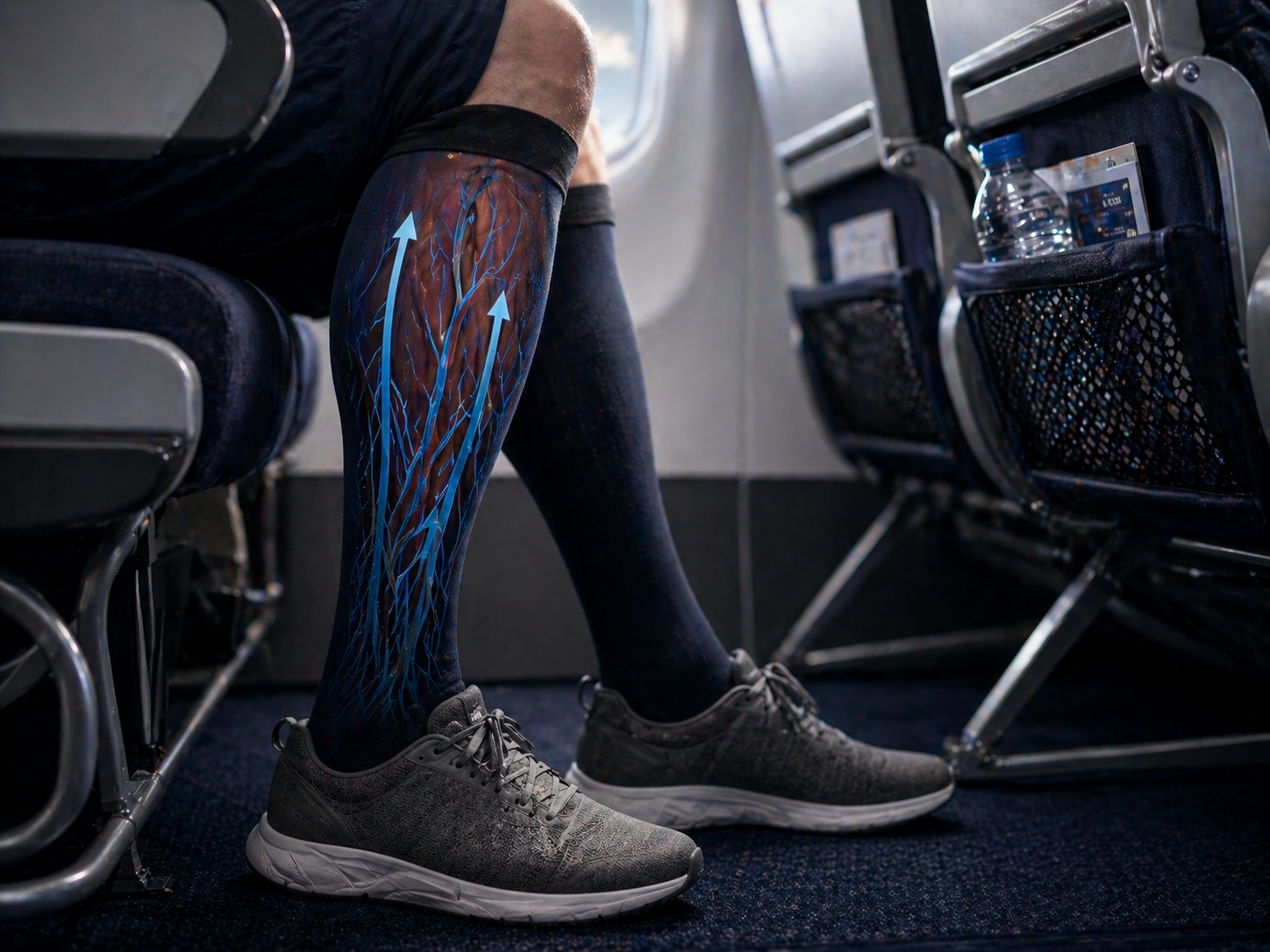
Deep vein thrombosis (DVT) occurs when a clot forms in a deep vein, usually in the leg. On long-haul flights, the main problem is prolonged, cramped sitting: the calf muscles stay inactive, venous return slows, and blood can pool in the lower legs.
Cabin conditions may play a role for some travelers, but the CDC Yellow Book is careful here: the strongest practical target is venous stasis from immobility, especially in people with existing risk factors.
The effect is not one factor. It is 10–14 hours of small constraints accumulating into reduced circulation.
The exact in-flight protocol (12-hour example)
Every 20–30 minutes (seated):
- 10–15 calf raises
- 10 ankle circles per foot
- 5–10 seconds of quad tension
Every 60–90 minutes:
- Stand up
- Walk the aisle for 2–3 minutes
Hydration baseline:
- Drink normally and avoid arriving dehydrated
Sleep block:
- Do not exceed ~2–3 hours without movement
Compression use:
- If indicated, put them on before boarding and keep them on for the full flight
Compression socks — who actually needs them
Graduated compression socks reduce venous pooling by applying more pressure at the ankle and less toward the knee.
Use them if:
- Flight >6–8 hours and you have increased DVT risk
- You have a history of marked in-flight swelling
- A clinician has recommended them for travel
Typical levels:
- 15–20 mmHg: common travel range
- 20–30 mmHg: often used for higher-risk travel, if properly fitted
Compression socks to consider
If compression socks make sense for your risk profile, choose graduated, below-knee socks with clear pressure ratings and sizing guidance.
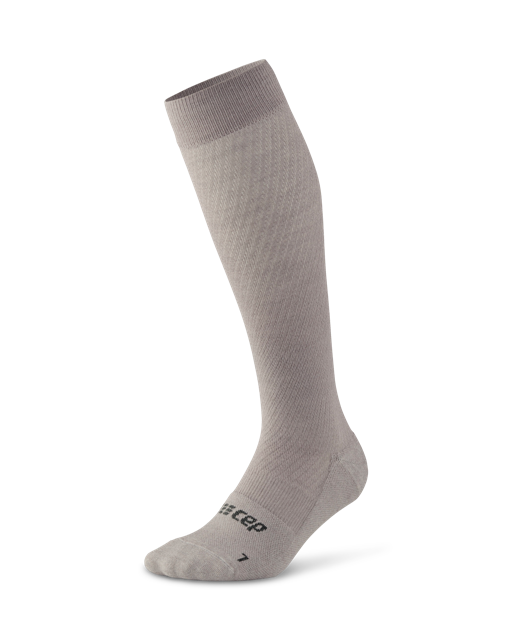
CEP
CEP Flight Compression Socks (20–30 mmHg)
Graduated 20–30 mmHg designed specifically for air travel. Size chart uses calf circumference, not just shoe size. Lightweight, no-slip fit.
View on Amazon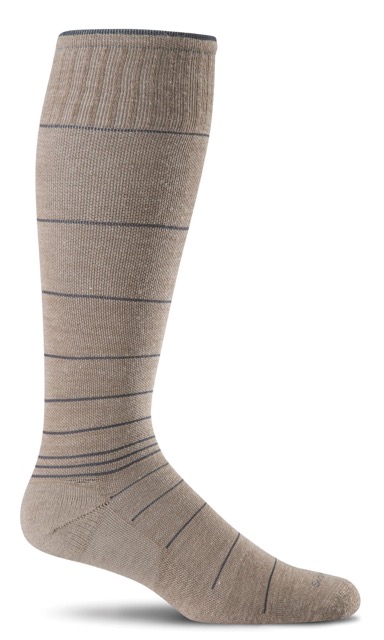
Sockwell
Sockwell Circulator Moderate Graduated Compression Socks
15–20 mmHg in merino-nylon blend. Good starting point for first-time compression sock wearers — lighter gradient, comfortable all day.
View on Amazon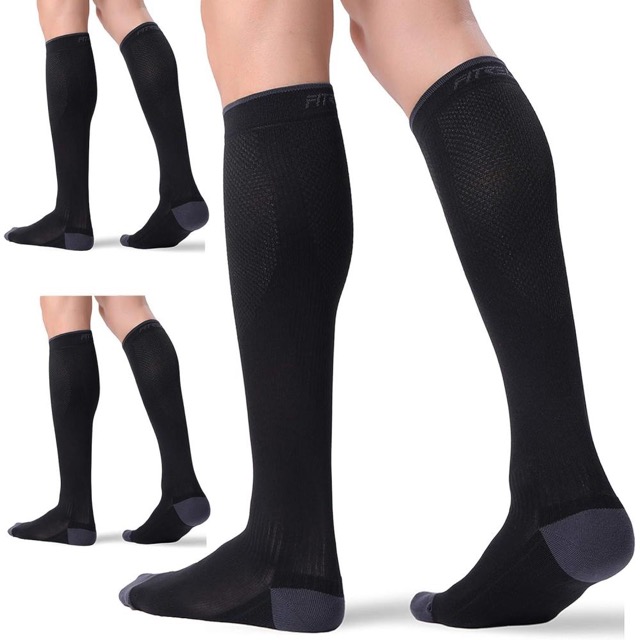
FITRELL
FITRELL Compression Socks 20–30 mmHg (3-Pack)
Three-pair multi-pack at 20–30 mmHg — useful when you want spare pairs for connecting flights or to rotate without re-washing mid-trip. Sized by shoe size rather than calf circumference, so verify your calf measurement against the size chart before ordering.
View on AmazonMovement inside a restricted seat
Focus on activating the calf muscle pump:
- Heel lifts
- Toe lifts
- Alternating foot pumps
Avoid crossing legs for long periods.
Hydration — what actually matters
Hydration is useful for comfort and avoiding dehydration, but it should not be sold as a proven DVT-prevention strategy. CDC Yellow Book says direct evidence does not support frequent hydration or alcohol avoidance specifically as protection against travel-associated VTE.
Baseline:
- Drink to thirst
- Bring water so you are not dependent on cabin service
Avoid:
- Alcohol as hydration
- Large infrequent intake
What not to do
- Aspirin without medical advice
- Relying only on aisle seat
- Overestimating hydration
- Tight non-compression socks
After landing — first 6 hours matter
- Walk 10–20 minutes
- Continue movement
- Watch for one-sided swelling, pain, tenderness, warmth, redness, unexplained shortness of breath, or chest pain. Seek medical care promptly if these appear.
FAQ
How common is DVT on long-haul flights?
The absolute risk is low for healthy travelers. CDC Yellow Book cites estimates around 1 in 4,656 to 1 in 6,000 person-flights for flights over 4 hours, with higher risk when preexisting factors are present.
Is 8 hours enough to cause a blood clot?
Risk rises with longer travel duration, but most travel-associated clots occur in people with additional risk factors.
Do compression socks work?
Graduated compression stockings appear to reduce asymptomatic DVT in travelers, according to CDC Yellow Book. Guidelines mainly recommend them for travelers at increased risk, not as mandatory gear for everyone.